
Navigating Safely: How to Spot a Scam Website Before You Click
The modern internet is a marvel of convenience. We can buy anything from anywhere, manage our lifetime savings via banking apps, and connect with niche online communities in seconds. However, this hyper-connected convenience has a dark side.
Cybercriminals are growing increasingly sophisticated. The days of easily spotted scam websites—riddled with obvious typos, pixelated logos, and broken English—are largely over. Today, fraudsters use automated tools, stolen code, and cloned templates to build highly convincing mirror sites, fake e-commerce storefronts, and deceptive investment portals.
For the average internet user, distinguishing a legitimate platform from a trap can feel nearly impossible. So, how can you protect yourself from falling victim to identity theft or financial fraud?
The Shifting Face of Online Threats
Traditional antivirus software is great for stopping malware from executing on your hard drive, but it often struggles to intercept social engineering. Phishing attacks and fraudulent escrow sites don’t always rely on malicious file downloads; instead, they trick you into willingly handing over your credit card details, login credentials, or cryptocurrency keys.
Furthermore, temporary “lookalike” domains spring up by the thousands every single day. A scammer might register a domain that looks identical to your bank or a trending retail brand, run high-intensity social media ads for 48 hours to steal money from unsuspecting buyers, and then disappear without a trace.
To stay safe, users must adopt a proactive, verification-first mindset before entering personal information or clicking a checkout button.
Introducing ScamWebGuard: Your Digital Safety Beacon
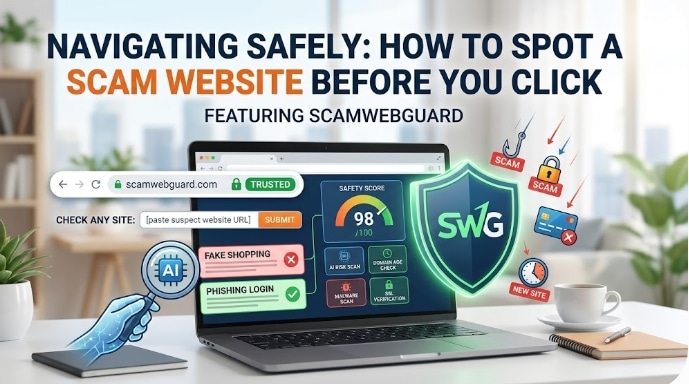
While manual inspection is a great habit to build, cyber threats move too quickly for human analysis alone. This is where advanced automated threat intelligence comes in. Platforms like ScamWebGuard have revolutionized personal cybersecurity by offering a free, instantaneous way to pull back the curtain on any URL.
Instead of guessing whether a site is legitimate, you can paste the link into an AI-powered website safety checker to receive a comprehensive security audit in real time.
The platform translates highly complex, technical web data into a straightforward safety score ranging from 0 to 100. It doesn’t just guess; it checks a variety of vital trust indicators simultaneously:
-
Global Blacklist Verification: The system instantly cross-references the URL against elite cybersecurity watchlists and threat intelligence feeds (including Google Safe Browsing, VirusTotal, PhishTank, and Spamhaus).
-
Domain Age Metrics: Scam websites rarely survive long. Checking the registration date helps expose “brand new” sites masquerading as established businesses.
-
SSL & Encryption Integrity: It verifies that data sent to the site is properly encrypted, alerting you if your passwords or credit card numbers would be exposed to hackers.
-
AI-Driven Layout Analysis: By leveraging artificial intelligence, the platform can scan the site’s structural heuristics to detect human-unreadable patterns common in phishing kits.
What Happens If You’ve Already Been Scammed?
Preventative tools are crucial, but millions of people still fall victim to digital fraud every year. Cryptocurrency scams, fraudulent investment brokers, and fake romance schemes can completely drain a person’s life savings.
Historically, victims felt they had nowhere to turn because traditional banking structures often can’t reverse blockchain transactions or wire transfers sent to overseas shells. Fortunately, modern security ecosystems are adapting. Beyond real-time prevention, platforms like ScamWebGuard also provide dedicated fund recovery support. For individuals who have lost substantial capital (specifically cases over $5,000), cybersecurity and forensic asset recovery experts offer free consultations to help map out legal and technical avenues to reclaim what was stolen.
Simple Rules for Everyday Browsing
While automated checkers do the heavy lifting, you can reinforce your digital perimeter by practicing three fundamental rules:
-
Never Click Directly from Unsolicited Messages: If you get a text or email from a delivery service or bank claiming an “issue with your account,” don’t click the link. Open your browser and navigate to the official site manually.
-
Double-Check the Address Bar: Scammers often alter a single letter in a famous URL (e.g., swapping an “m” for an “rn” or a “1” for an “l”).
-
Scan Before You Buy: If you find a retail deal on social media that seems too good to be true, copy the link and run it through a reputable scanner first.
Conclusion: Cultivate a Verification Culture
The digital world moves fast, and cybercriminals rely on your haste to succeed. Taking just five seconds to run a suspicious URL through a trusted verification hub before making a payment or logging in can save you months of financial and emotional headache.
Join Our WhatsApp Channel To Receive Updates
Join Our Facebook Channel To Receive Updates
Click Here to Join Our Telegram Channel To Receive Updates
In an age where seeing is no longer believing, make verification your ultimate superpower.