
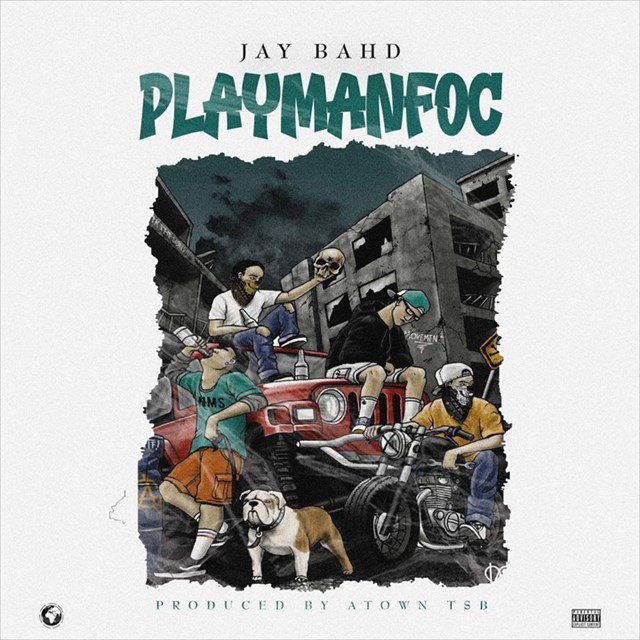

Jay bahd – playmanfou
Jay Bahd – Playmanfou
Jay Bahd makes a bold statement with his latest release “Playmanfou,” a raw and energetic drill anthem that captures the rebellious spirit and street confidence of the Asakaa movement.
Ghanaian rapper Jay Bahd, one of the pioneers of the Kumerican drill wave, has returned with another explosive track titled “Playmanfou.” Known for his fearless delivery and gritty storytelling, Jay Bahd continues to cement his place as one of the most authentic voices in Ghana’s hip-hop and drill culture. This song is more than just another Asakaa record — it’s a statement of identity, resilience, and pride in one’s background.
From the opening seconds, “Playmanfou” draws you into a world of pulsating 808s, sharp hi-hats, and heavy basslines. The beat, rich in texture and attitude, immediately sets the tone — dark, intense, and unapologetically street. The production, crafted with precision, blends Ghanaian drill rhythms with Western trap influences, giving the song both a local flavor and a global sound. It’s the kind of instrumental that demands confidence, and Jay Bahd delivers just that in every bar.
Jay Bahd’s vocal delivery is electrifying — rough-edged, commanding, and full of emotion. He doesn’t just rap; he performs with conviction, embodying the hustle, struggle, and hunger that define life in the streets of Kumasi. His flow is sharp and aggressive, switching seamlessly between English, Twi, and street slang, reflecting the hybrid identity of the Kumerican youth. Every line hits hard, painting vivid images of ambition, survival, and the code of loyalty that runs deep in his world.
Thematically, “Playmanfou” explores perseverance and authenticity. Jay Bahd uses the song to assert himself and his crew’s dominance in the music scene while speaking to the mindset of those who refuse to conform or fake success. The message is clear — staying true to yourself is more valuable than pretending to fit into societal molds. “Playmanfou” becomes both a personal declaration and a rallying cry for the young generation that believes in hustle over hype.
Emotionally, the song carries a mix of aggression and pride. There’s a fierce confidence in Jay Bahd’s tone, but beneath that toughness lies the emotional story of a young man who’s fought for everything he has. He channels his struggles into power, turning pain into rhythm and resilience into art. This emotional duality — strength and vulnerability intertwined — is what makes Jay Bahd’s music resonate with fans.
The production perfectly complements this energy. The layered bass and trap drums create a cinematic backdrop, while subtle melodic loops give the song depth and character. It’s both street and polished, a reflection of how the Asakaa movement has evolved from underground energy into a refined yet raw musical force. The mixing and mastering bring out Jay Bahd’s voice clearly, ensuring every verse carries its full impact.
Fans have responded enthusiastically to “Playmanfou,” flooding social media with reactions that celebrate Jay Bahd’s consistency and authenticity. Many have praised how he continues to push the Asakaa sound forward while staying true to its roots. The song has also become an anthem among fans who see themselves reflected in his lyrics — those hustling daily, chasing dreams despite the odds. For many, “Playmanfou” isn’t just music; it’s motivation.
In terms of artistry, this release highlights Jay Bahd’s growth. From his early breakout moments to now, he’s developed a more refined sense of balance between raw street energy and mainstream appeal. His lyrical delivery has become tighter, his flow more controlled, and his songwriting more intentional. While he still embodies the rebel spirit that defines Kumerican drill, he’s clearly aware of his role as a leader in Ghana’s evolving urban soundscape.
Beyond Ghana, the song adds to the global rise of African drill music. Artists like Jay Bahd are proving that African stories, languages, and rhythms can stand shoulder to shoulder with UK and US drill scenes. His ability to blend Twi with drill cadence makes his sound distinctive — a proud representation of Ghanaian identity on a global stage.
For Jay Bahd, “Playmanfou” is another reminder that his success isn’t accidental. It’s the result of persistence, authenticity, and a refusal to compromise his style for trends. Each new release from him feels like a continuation of the Kumerican story — one of community, culture, and unbreakable spirit.
As the Asakaa movement continues to define modern Ghanaian hip-hop, “Playmanfou” stands as a powerful anthem for self-belief and resilience. It’s Jay Bahd at his best — raw, honest, and unapologetically himself.