Sports and physical activity are important for strength, endurance, coordination, and overall health. However, they can also place stress on the muscles, joints, ligaments, tendons, and spine. Whether someone plays competitively, exercises for fitness, runs on weekends, or enjoys recreational sports, injuries can happen when the body is overloaded, twisted, strained, or not given enough time to recover.
Sports injuries can be sudden, such as a fall, collision, awkward landing, or quick change in direction. They can also develop slowly from repeated stress, poor mechanics, overtraining, or muscle imbalance. When pain starts affecting movement, performance, or daily activities, it may be time to look closer at what is causing the problem.
Common Types of Sports Injuries
Sports injuries can affect many areas of the body. Some involve the spine, hips, shoulders, knees, ankles, or wrists. Others involve muscles, tendons, ligaments, or nerves. Common sports-related injuries may include:
Cleveland Clinic describes sports injuries as muscle, bone, or soft tissue injuries that happen during physical activity. They can include sprains, strains, fractures, and longer-lasting conditions such as tendinitis. Some injuries improve with rest and conservative care, while others need a more detailed evaluation.
Acute Injuries vs. Overuse Injuries
An acute injury happens suddenly. Examples include rolling an ankle, pulling a hamstring while sprinting, landing wrong after a jump, or straining the lower back during a lift. These injuries are often easier to identify because the pain begins around a specific moment.
Overuse injuries develop over time. A runner may notice knee or hip pain after gradually increasing mileage. A tennis player may develop shoulder or elbow pain from repeated swings. A weightlifter may feel recurring low back tightness from repeated loading or poor form.
Both types of injuries matter. Acute injuries may need immediate care to rule out serious damage. Overuse injuries may require changes to movement patterns, training volume, strength, flexibility, and recovery habits.
Why Movement Patterns Matter
The body works as a connected system. A problem in one area can increase stress somewhere else. For example, limited hip mobility may place more pressure on the lower back. Weakness around the shoulder blade may contribute to shoulder or neck strain. Poor ankle mobility may affect the knee, hip, or lower back during running and jumping.
This is why treating only the painful area does not always solve the issue. The location of pain is important, but it may not be the only area involved. A careful provider may look at posture, joint motion, muscle balance, flexibility, and how the body moves during common activities.
How Chiropractic Care May Help
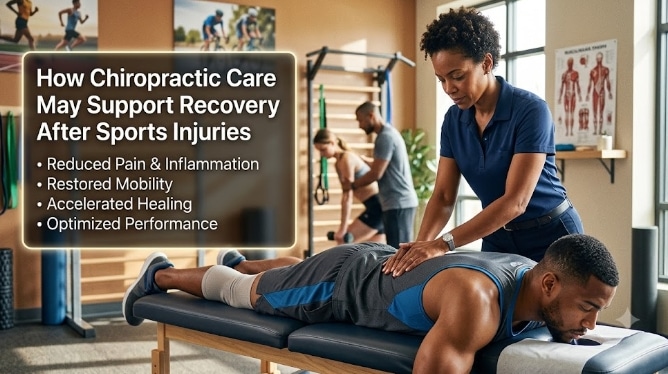
Chiropractic care may support recovery from certain sports-related injuries by improving joint movement, reducing mechanical stress, and helping the body move more efficiently. A chiropractor may evaluate the spine, hips, shoulders, extremity joints, muscles, and movement patterns to better understand what is contributing to pain or limited performance.
Treatment may include spinal adjustments, joint mobilization, soft tissue therapy, stretching, strengthening guidance, posture education, and recommendations for safer movement. The goal is not only to reduce discomfort, but also to help the athlete return to activity with better control and less repeated strain.
For someone searching for a sports injury chiropractor, it is important to choose a provider who performs a detailed evaluation and understands that every injury is different. A sprained ankle, strained back, irritated shoulder, or running-related hip problem should not all be treated the same way.
The Role of Rehabilitation and Recovery
Recovery is not just about waiting for pain to go away. Muscles, tendons, ligaments, and joints often need the right amount of movement, rest, and gradual loading to heal well. Returning to activity too quickly may increase the risk of another injury. Waiting too long without movement may lead to stiffness, weakness, and reduced confidence.
A conservative care plan may include mobility work, strengthening exercises, balance training, and sport-specific movement guidance. For example, a runner may need hip and glute strengthening. A golfer may need better spinal rotation and core control. A baseball or tennis player may need shoulder mobility and stability work.
The best plan depends on the injury, the sport, the person’s fitness level, and the demands of returning to play.
When to Get an Injury Evaluated
Some mild soreness after activity can be normal, especially after a new workout or an increase in training. However, certain symptoms should not be ignored. A sports injury should be evaluated if pain is severe, swelling is significant, movement is limited, or the person cannot bear weight.
Medical attention is also important if there is numbness, tingling, weakness, visible deformity, a popping sound at the time of injury, pain after a collision, or symptoms that keep getting worse. Head injuries, chest pain, trouble breathing, or loss of consciousness require urgent medical care.
A chiropractor can help evaluate many musculoskeletal concerns, but a responsible provider should refer out when imaging, emergency care, orthopedic care, or another medical specialist is needed.
Preventing Future Sports Injuries
Not every injury can be prevented, but many risk factors can be reduced. Athletes and active people can support injury prevention by warming up properly, building strength gradually, using good technique, resting between hard sessions, and avoiding sudden increases in training.
Helpful habits may include:
Pain is often a signal that something needs attention. Addressing small problems early may help prevent them from becoming more limiting.
Supporting an Active Lifestyle
Sports injuries can be frustrating, especially when they interfere with training, competition, work, or daily routines. Chiropractic care may be one helpful option for people dealing with certain types of sports-related pain, stiffness, and movement problems.
Join Our WhatsApp Channel To Receive Updates
Join Our Facebook Channel To Receive Updates
Click Here to Join Our Telegram Channel To Receive Updates
The best results usually come from a complete approach. That means understanding the cause of the injury, improving movement quality, building strength, allowing enough recovery, and returning to activity at the right pace. With the right plan, many active people can move better, recover more confidently, and reduce the chance of repeated strain.