
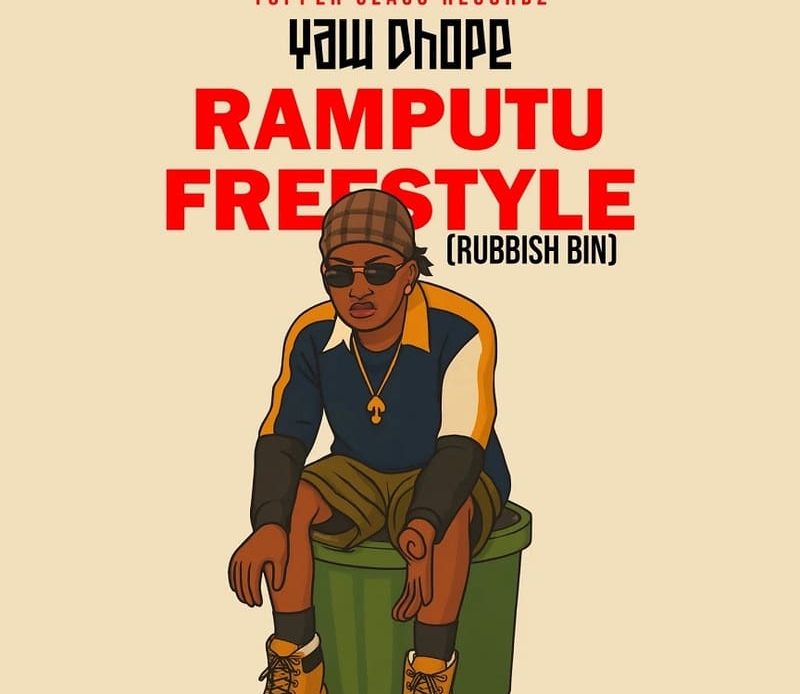
Yaw dhope – ramputu freestyle (rubbish bin)
Yaw Dhope – Ramputu Freestyle (Rubbish Bin)
The underground energy of Ghanaian Hip-Hop has violently erupted into the mainstream with Yaw Dhope’s ferocious and unbridled release, “Ramputu Freestyle (Rubbish Bin).” This track is a masterclass in raw, unfiltered lyrical dexterity, cementing Yaw Dhope’s reputation as a formidable rapper whose Afro-Hip-Hop and Afrosounds blend is impossible to ignore. Stripping away the polish of commercial releases, this freestyle delivers a powerful, direct-to-the-street message of dominance, authenticity, and scorn for industry rivals—those he contemptuously dismisses as “rubbishin’”—highlighting the lyrical warfare currently defining Ghana music 2025. More than just a song, “Ramputu Freestyle” is a declaration of intent, ensuring this Yaw Dhope new song 2025 is a mandatory listen for anyone tracking the most potent trending voices in Ghanaian rap.
The core emotional tone of “Ramputu Freestyle (Rubbish Bin)” is one of intense confidence and lyrical aggression. The title itself, while humorously labeled “Rubbish Bin,” sets the stage for Yaw Dhope to symbolically throw out the competition, dismissing their efforts as trash. The theme is pure rap dominance: asserting superiority through flow, wordplay, and undeniable street credibility. Yaw Dhope’s lyrics, delivered mostly in a powerful mix of English, Twi, and Pidgin, boast of his consistency (“Ten toes everyday m3 p3pa me feet” – meaning, he’s always on his grind) and his unmatched skillset (“Y’all dope music enafi skip”). The lyrical depth is found in the clever disses and metaphorical boasts that make the track a verbal battleground. The freestyle is a narrative of an artist who has faced skepticism and rivalry but chooses to respond with undeniable fire, turning his detractors’ negativity into fuel for his success. This authenticity and raw honesty resonate powerfully with the youth audience that values straightforward, no-nonsense content.
The beat and production style of “Ramputu Freestyle” are rooted in the hard-hitting, minimalist sound favored by contemporary Afro-Hip-Hop and the aggressive aesthetics of Afro-Drill, which is increasingly popular in Ghana. The production is sparse but effective, built around a deep, thudding 808 bass, crisp snares, and a simple, repetitive loop that ensures the focus remains squarely on Yaw Dhope’s rapid-fire delivery. As a freestyle, the arrangement prioritizes rhythm and vocal clarity over complex melodies, providing the perfect canvas for the artist to showcase his technical rapping ability. The raw mixing captures the immediacy and spontaneity of the track, giving it that authentic, street-corner cipher feel. This deliberate choice of production style enhances the street appeal; it sounds like music that was born from the hustle, not manufactured in a sterile studio. The song is a solo effort, proving that Yaw Dhope has the star power and lyrical dexterity to carry a high-energy track without any collaborations, relying only on his own potent flow to secure its place as a latest hit.
Yaw Dhope’s vocal delivery on this freestyle is nothing short of breathtaking. He approaches the beat with a seasoned intensity, his voice sharp, clear, and commanding. He shifts cadences rapidly, effortlessly blending quick-fire flows with more rhythmic, melodic sections, keeping the listener engaged across the track’s extended runtime. The lyrics themselves are packed with quotable lines that are designed to be shared and repeated on social media. He uses evocative street language and clever metaphors that paint him as an unstoppable force, a “topper class” act whose talent is inherent and not manufactured. His storytelling is direct, referencing his focus (“non of mi business” on distractions) and his divine protection, while showcasing a versatility in language that appeals across the linguistic divides in Ghana. This masterful control over his voice and words is the engine behind the track’s success, confirming his position among the elite lyricists in Ghanaian rap today.
The fan reaction to “Ramputu Freestyle (Rubbish Bin)” has been instantaneous, characterizing it as a crucial moment for Yaw Dhope’s career. Originally released perhaps as an independent drop to maintain his presence, its sheer quality saw it immediately go viral, especially on platforms where fans dissect and celebrate bars—like X (formerly Twitter) and YouTube comment sections. The track’s assertive stance and raw sound have earned it significant street appeal, with the “Rubbish Bin” label becoming a viral meme and a term of endearment for the track. The single’s success is a strong indicator of Yaw Dhope’s growing influence as a rapper, contributing significantly to his stream and download numbers. This track not only highlights his impressive talent but also solidifies his space in the Ghana music 2025 conversation, particularly in the competitive Hip-Hop/Rap category, positioning him as an artist who respects the craft and consistently delivers high-calibre lyrical content